
Home » 2022
Yearly Archives: 2022
Native Americans in World War II – Radio Feature
A little while ago, I was contacted by Markus Harmann, freelance journalist, to discuss Native Americans’ contributions to World War II. Harmann had learned of a West German independent researcher in local history who held a number of war letters from German soldiers during the battle of Huertgen Forest in 1944/45. The letters frequently mention “Indians” among the American soldiers who sneak up to German lines at night to raid German positions and kill unsuspecting soldiers.
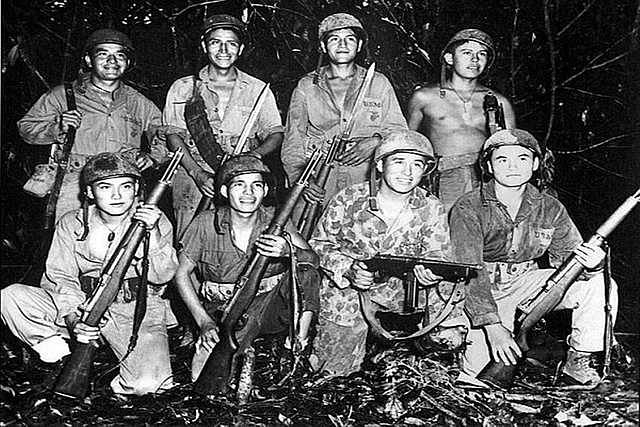
This anecdote was a great opportunity to discuss Native contributions to the war, as well as expectations the Native soldiers faced among both Germans and American troops regarding their abilities to fight. Harmann and I looked into what Tom Holm called the “Indian Scout Syndrome” and detail statistics and particular anecdotes. Harmann also interviewed Charles Norman Shay (Penobscot), who participated in the D-Day landing as a medic.
The full-length feature (in German), “Wie American Natives halfen, Hitler zu besiegen“, is broadcast at Westdeutscher Rundfunk (WDR), series “Neugier genügt”, on 6 June, the anniversary of the D-Day landing.
Using Robots for Community Work at the Museum
Research partners from the international project „Presença Karajá“ with partners in Brazil, Belgium, Portugal, and Canada visited our Leipzig exhibition last week using ELIPS (our new fleet of telepresence robots). They took a closer look at the “Room of Remembrance” and at a display of ritxoko dolls from the Iny Karajá in Brazil. Ritxoko are dolls traditionally made of unburnt clay and wax, representing social and gender roles in Iny Karajá communities for children. After World War II, ritxoko were increasingly made of burnt clay, became larger, and are produced also for the tourist market, thus providing a source of income. Their female producers, the ceramistas, are revered in their communities. Ritxoko have recently been listed as part of national cultural heritage in Brazil. The Project Presença Karajá“ seeks to identify ritxoko in museum collections worldwide and to build an online database that is supposed to reconnect Iny Karajá with historical dolls, patterns and production methods, and to serve researchers worldwide.
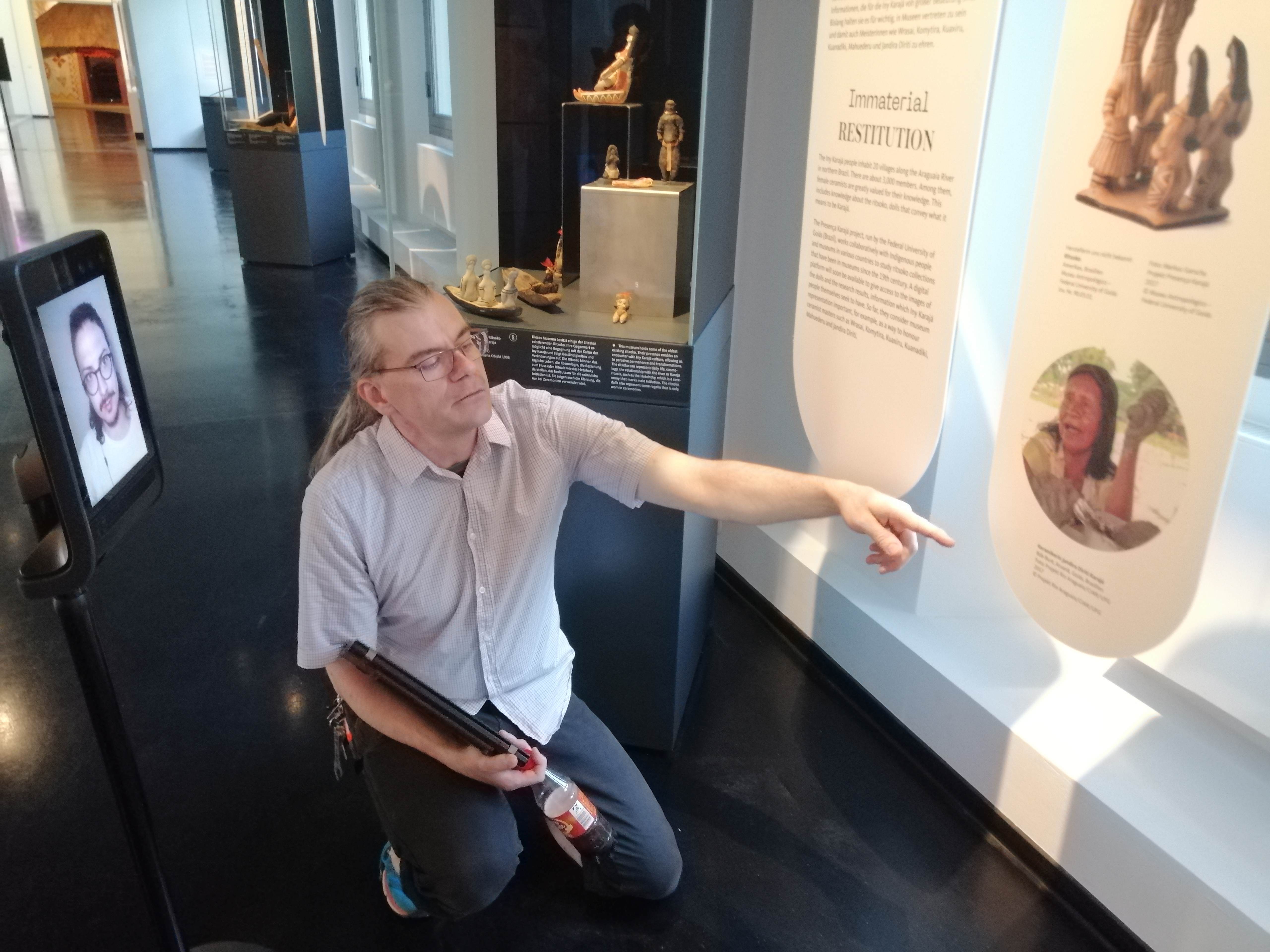
We have have video conferences with the project group regularly since 2019 in order to study the historic collection of some 80 ritxoko dolls at Leipzig.
During the project meeting in May, a member of the research group remotely steered ELIPS from Canada, while researchers and Karajá representatives in Brazil “moved along”. Our highlight of the tour was when several kids gathered around the laptop of a Karajá representative on the river island Banananal to see a doll which had been collected there in 1908.
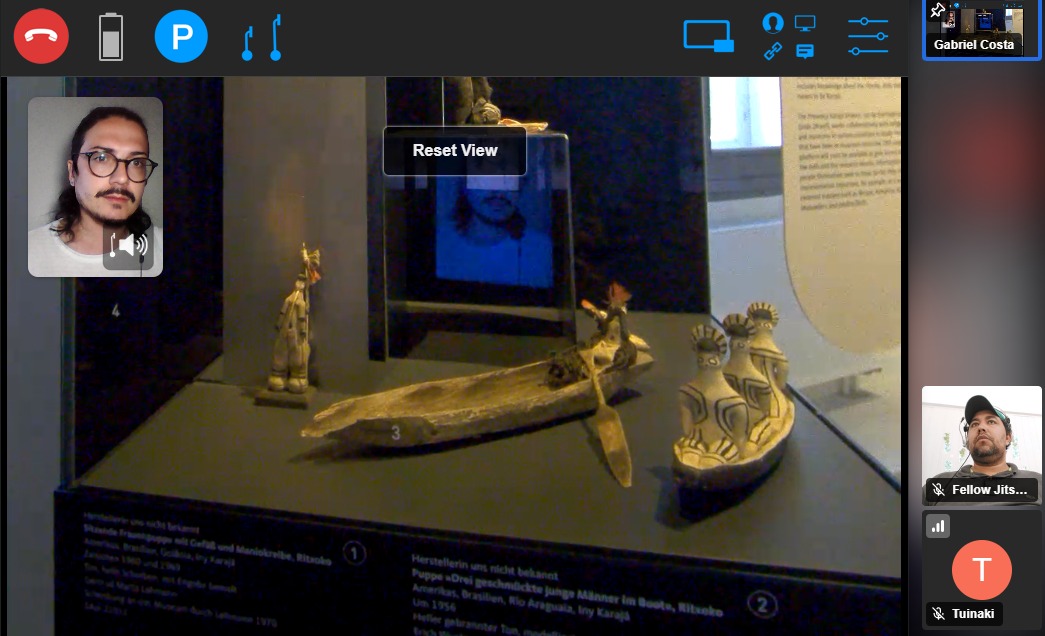
It is exactly that kind of interactive exchange that we are looking to enable with ELIPS. Taking it to the test proved how well these telepresence robots serve as tools for collaborating worldwide.
 frankusbeck